Showing posts with label design. Show all posts

Design Secrets: Advertising: 50 Real-Life Projects Uncovered

Buy Cheap Design Secrets: Advertising: 50 Real-Life Projects Uncovered


Buy Low Price From Here Now

In this fourth title in the Design Secrets series, each design project selected is shown in detail from concept to completion including all the steps in-between. This book presents 50 real-life design projects: original plans, sketches, interim drawings, and presentations each accompanied by informative captions that show how designers present their ideas, and solve problems.

Each campaign in this book will have one distinctive and creative element that sets it apart and makes it worthwhile to look at closely. For example, one campaign will go into detail about how the creative team came up with the idea; another will go into more detail on the use of a song in the campaign, and how that came to be; and another will address a television campaign that relied heavily on special effects.
Readmore

Technical Details

See more technical details
Customer Buzz
 "An EXCELLENT analysis on 50 top-notch campaigns..." 2003-05-30
By The Critic (Dominican Republic)
I'm in my senior year of advertising and this book helps me understand and analyze deeply some incredibly smart ad campaigns. From Absolut Vodka to Volkswagen, these campaigns (some quite know, others should be for their witty strategy) will help anyone who wants to understand different concepts of different products. A definite two thumbs up! About the structure, its layout is very organized, the images and the content is great (I love the original sketches for the print ads and the storyboards) and the fact that it's hardcovered makes it even better.


Images Product

Buy Design Secrets: Advertising: 50 Real-Life Projects Uncovered Now

Tattoo Design Book Special Number #03

Buy Cheap Tattoo Design Book Special Number #03


Buy Low Price From Here Now


Readmore

Technical Details

See more technical details

Images Product

Buy Tattoo Design Book Special Number #03 Now

Japanese Tattoo Design Handbook Volume II [JAPANESE TATTOO DESIGN HANDBK]

Buy Cheap Japanese Tattoo Design Handbook Volume II [JAPANESE TATTOO DESIGN HANDBK]


Buy Low Price From Here Now


Readmore

Technical Details

See more technical details

Images Product

Buy Japanese Tattoo Design Handbook Volume II [JAPANESE TATTOO DESIGN HANDBK] Now

Graphic Design: The New Basics

Buy Cheap Graphic Design: The New Basics


Buy Low Price From Here Now

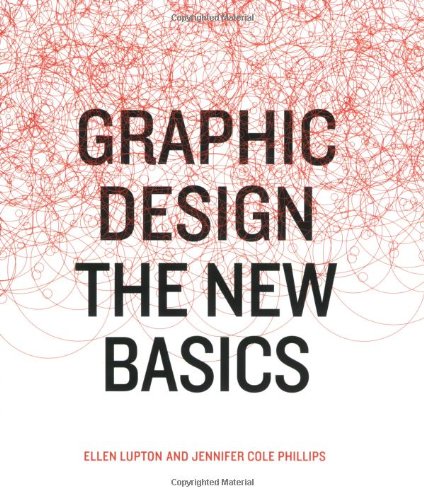
How do designers get ideas? Many spend their time searching for clever combinations of forms, fonts, and colors inside the design annuals and monographs of other designers' work. For those looking to challenge the cut-and-paste mentality there are few resources that are both informative and inspirational. In Graphic Design: The New Basics, Ellen Lupton, best-selling author of such books as Thinking with Type and Design It Yourself, and design educator Jennifer Cole Phillips refocus design instruction on the study of the fundamentals of form in a critical, rigorous way informed by contemporary media, theory, and software systems.

Through visual demonstrations and concise commentary, The New Basics shows students and professionals how to build interest and complexity around simple relationships between formal elements of two-dimensional design such as point, line, plane, scale, hierarchy, layers, and transparency. The New Basics explains the key concepts of visual language that inform any work of design from a logo or letterhead to a complex web site. It takes a fresh approach to design instruction by emphasizing visually intensive, form-based thinking in a manner that is in tune with the latest developments in contemporary media, theory, art, and technology. Colorful, compact, and clearly written, The New Basics is the new indispensable resource for anyone seeking a smart, inspiring introduction to graphic design and destined to become the standard reference work in design education.
Readmore

Technical Details

- ISBN13: 9781568987026
- Condition: NEW
- Notes: Brand New from Publisher. No Remainder Mark.
See more technical details
Customer Buzz
 "Disappointing" 2010-02-19
By Louis B. Dina (Birmingham, AL)
I was very disappointed in this book. Given the title, I expected more cohesive guidelines and analysis on assembling the "New Basics" into my designs. To me, it was primarily a showcase of work done by the authors' students, some of which I enjoyed, but I didn't find it very helpful or insightful. In fact, I returned it for a refund.


Also, I found some of the type so small as to be unreadable, which for experienced designers, I found surprising. Not high on my list, obviously. I expect a title and/or subtitle to deliver on its implied promise. Perhaps I totally misunderstood the intent of the book, but I expected something that would weave these so-called new basics into a whole, provide direction, and help me produce better designs. Maybe that happens over the course of time in class, but I didn't see that happening in the book.


If you're looking for guidance and direction, I don't think this is the book for you. It wasn't for me.

Customer Buzz
 "Graphic Design The new Basics" 2009-09-05
By E. Schneider (Tampa FL)
This is an excellent text book for beginning design and art students. Easy to read with strong examples this book fills a need in the arts community.

Customer Buzz
 "Amazing!" 2009-02-17
By Rhea Mertha
It came fast and on time through standard shipping. It was exactly in the condition I ordered it in and was carefully packaged so that no damage occurred during shipping. Thank you so much!! I really prefer buying from Amazon than private sellers.

Customer Buzz
 "Top of the line graphic design book. Great for referencin." 2008-09-28
By Tyler Hargrove (Mo. USA)
This book is very helpful. It has a lot to offer to beginning students or just someone trying on their own. Its not so organized as a text book would be which keeps it fresh and fun to still look at. But it definitely has a lot to offer.

Customer Buzz
 "excellent overview" 2008-08-28
By Gary R. Harding (San Diego, CA USA)
this is an excellent overview: while I appreciated the new media content, that felt far more like info for those considering an MFA in graphic design and are not what I feel are basic in any way. I am a working graphic artist and using programming languages easy or not to develop visual media is not part of my work or a requirement. Flash animations, web design are, though. I feel other areas could have been better flushed out.


Images Product

Buy Graphic Design: The New Basics Now

Graphic Design: The New Basics

Buy Cheap Graphic Design: The New Basics


Buy Low Price From Here Now

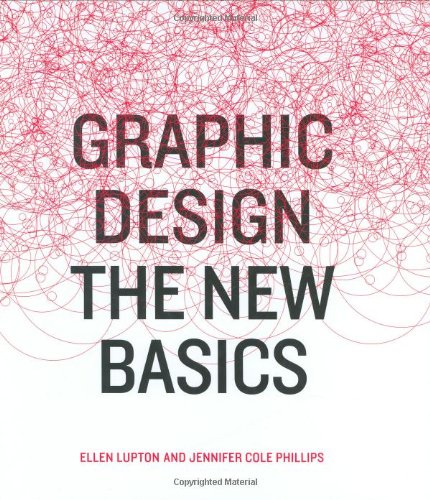
How do designers get ideas? Many spend their time searching for clever combinations of forms, fonts, and colors inside the design annuals and monographs of other designers' work. For those looking to challenge the cut-and-paste mentality there are few resources that are both informative and inspirational. In Graphic Design: The New Basics, Ellen Lupton, best-selling author of such books as Thinking with Type and Design It Yourself, and design educator Jennifer Cole Phillips refocus design instruction on the study of the fundamentals of form in a critical, rigorous way informed by contemporary media, theory, and software systems.

Through visual demonstrations and concise commentary, The New Basics shows students and professionals how to build interest and complexity around simple relationships between formal elements of two-dimensional design such as point, line, plane, scale, hierarchy, layers, and transparency. The New Basics explains the key concepts of visual language that inform any work of design from a logo or letterhead to a complex web site. It takes a fresh approach to design instruction by emphasizing visually intensive, form-based thinking in a manner that is in tune with the latest developments in contemporary media, theory, art, and technology. Colorful, compact, and clearly written, The New Basics is the new indispensable resource for anyone seeking a smart, inspiring introduction to graphic design and destined to become the standard reference work in design education.
Readmore

Technical Details

See more technical details
Customer Buzz
 "Disappointing" 2010-02-19
By Louis B. Dina (Birmingham, AL)
I was very disappointed in this book. Given the title, I expected more cohesive guidelines and analysis on assembling the "New Basics" into my designs. To me, it was primarily a showcase of work done by the authors' students, some of which I enjoyed, but I didn't find it very helpful or insightful. In fact, I returned it for a refund.


Also, I found some of the type so small as to be unreadable, which for experienced designers, I found surprising. Not high on my list, obviously. I expect a title and/or subtitle to deliver on its implied promise. Perhaps I totally misunderstood the intent of the book, but I expected something that would weave these so-called new basics into a whole, provide direction, and help me produce better designs. Maybe that happens over the course of time in class, but I didn't see that happening in the book.


If you're looking for guidance and direction, I don't think this is the book for you. It wasn't for me.

Customer Buzz
 "Graphic Design The new Basics" 2009-09-05
By E. Schneider (Tampa FL)
This is an excellent text book for beginning design and art students. Easy to read with strong examples this book fills a need in the arts community.

Customer Buzz
 "Amazing!" 2009-02-17
By Rhea Mertha
It came fast and on time through standard shipping. It was exactly in the condition I ordered it in and was carefully packaged so that no damage occurred during shipping. Thank you so much!! I really prefer buying from Amazon than private sellers.

Customer Buzz
 "Top of the line graphic design book. Great for referencin." 2008-09-28
By Tyler Hargrove (Mo. USA)
This book is very helpful. It has a lot to offer to beginning students or just someone trying on their own. Its not so organized as a text book would be which keeps it fresh and fun to still look at. But it definitely has a lot to offer.

Customer Buzz
 "excellent overview" 2008-08-28
By Gary R. Harding (San Diego, CA USA)
this is an excellent overview: while I appreciated the new media content, that felt far more like info for those considering an MFA in graphic design and are not what I feel are basic in any way. I am a working graphic artist and using programming languages easy or not to develop visual media is not part of my work or a requirement. Flash animations, web design are, though. I feel other areas could have been better flushed out.


Images Product

Buy Graphic Design: The New Basics Now

Graphic Design: The New Basics

Buy Cheap Graphic Design: The New Basics


Buy Low Price From Here Now

How do designers get ideas? Many spend their time searching for clever combinations of forms, fonts, and colors inside the design annuals and monographs of other designers' work. For those looking to challenge the cut-and-paste mentality there are few resources that are both informative and inspirational. In Graphic Design: The New Basics, Ellen Lupton, best-selling author of such books as Thinking with Type and Design It Yourself, and design educator Jennifer Cole Phillips refocus design instruction on the study of the fundamentals of form in a critical, rigorous way informed by contemporary media, theory, and software systems.

Through visual demonstrations and concise commentary, The New Basics shows students and professionals how to build interest and complexity around simple relationships between formal elements of two-dimensional design such as point, line, plane, scale, hierarchy, layers, and transparency. The New Basics explains the key concepts of visual language that inform any work of design from a logo or letterhead to a complex web site. It takes a fresh approach to design instruction by emphasizing visually intensive, form-based thinking in a manner that is in tune with the latest developments in contemporary media, theory, art, and technology. Colorful, compact, and clearly written, The New Basics is the new indispensable resource for anyone seeking a smart, inspiring introduction to graphic design and destined to become the standard reference work in design education.
Readmore

Technical Details

See more technical details
Customer Buzz
 "Disappointing" 2010-02-19
By Louis B. Dina (Birmingham, AL)
I was very disappointed in this book. Given the title, I expected more cohesive guidelines and analysis on assembling the "New Basics" into my designs. To me, it was primarily a showcase of work done by the authors' students, some of which I enjoyed, but I didn't find it very helpful or insightful. In fact, I returned it for a refund.


Also, I found some of the type so small as to be unreadable, which for experienced designers, I found surprising. Not high on my list, obviously. I expect a title and/or subtitle to deliver on its implied promise. Perhaps I totally misunderstood the intent of the book, but I expected something that would weave these so-called new basics into a whole, provide direction, and help me produce better designs. Maybe that happens over the course of time in class, but I didn't see that happening in the book.


If you're looking for guidance and direction, I don't think this is the book for you. It wasn't for me.

Customer Buzz
 "Graphic Design The new Basics" 2009-09-05
By E. Schneider (Tampa FL)
This is an excellent text book for beginning design and art students. Easy to read with strong examples this book fills a need in the arts community.

Customer Buzz
 "Amazing!" 2009-02-17
By Rhea Mertha
It came fast and on time through standard shipping. It was exactly in the condition I ordered it in and was carefully packaged so that no damage occurred during shipping. Thank you so much!! I really prefer buying from Amazon than private sellers.

Customer Buzz
 "Top of the line graphic design book. Great for referencin." 2008-09-28
By Tyler Hargrove (Mo. USA)
This book is very helpful. It has a lot to offer to beginning students or just someone trying on their own. Its not so organized as a text book would be which keeps it fresh and fun to still look at. But it definitely has a lot to offer.

Customer Buzz
 "excellent overview" 2008-08-28
By Gary R. Harding (San Diego, CA USA)
this is an excellent overview: while I appreciated the new media content, that felt far more like info for those considering an MFA in graphic design and are not what I feel are basic in any way. I am a working graphic artist and using programming languages easy or not to develop visual media is not part of my work or a requirement. Flash animations, web design are, though. I feel other areas could have been better flushed out.


Images Product

Buy Graphic Design: The New Basics Now

Quests: Design, Theory, and History in Games and Narratives

Buy Cheap Quests: Design, Theory, and History in Games and Narratives


Buy Low Price From Here Now

This unique take on quests, incorporating literary and digital theory, provides an excellent resource for game developers. Focused on both the theory and practice of the four main aspects of quests (spaces, objects, actors, and challenges), each theoretical section is followed by a practical section that contains exercises using the Neverwinter Nights Aurora Toolset.
Readmore

Technical Details

See more technical details
Customer Buzz
 "Nice ballance betwen theory and practice" 2009-10-02
By L. oliveira (São Carlos, SP, Brasil.)
(First of all, English is not my language... so I will try to write this review the best I can.. sorry for mispellings) I bought this book for my master degree studies and I was surprised with the theoretical analisis mixed with practice... the author get a nice mix of both and made a great analisis of quest's history and theory.

The only thing I don't like too mutch is the design of text that used just a portion of the paper... there is too mutch blank area in this print... but could be nice to someone who likes to make annotations over the text...

The book I've bought was a used one, but the conditions are very good... just like a new one... so... that's it... a good book for those who want to learn more about quests, or who want to design better quests...


Images Product

Buy Quests: Design, Theory, and History in Games and Narratives Now

The Japanese Tattoo Design Handbook, Vol. 2

Buy Cheap The Japanese Tattoo Design Handbook, Vol. 2


Buy Low Price From Here Now

Collected together for the first time are 100 on-skin designs from some of Japan’s top irezumi artists. Tattooists and Japanese aficionados alike will value this as a great sourcebook and fascinating art ink collection. Volume IIIof a two-book set.
Readmore

Technical Details

See more technical details

Images Product

Buy The Japanese Tattoo Design Handbook, Vol. 2 Now

Harvard Design School Guide to Shopping

Buy Cheap Harvard Design School Guide to Shopping


Buy Low Price From Here Now


Readmore

Technical Details

See more technical details
Customer Buzz
 "good trade" 2005-09-12
By P. Quezada Roa
no problems, I live in chile and i receipt my books in less than two months, maybe they could improve the bundle (the plastic).

Serious.

thats all


Customer Buzz
 "Latest Design Accessory for the Bubble Economy" 2003-05-28
By Aura Host (Los Angeles, CA USA)
For a volume that purports to be scholarly research from Harvard University, it incorporates preciously little hard facts or empirical data from the commercial retail industry, aside from the colorful graphics, it represents, at best, an amateurish take on a global economy in the form of bumper stickers rather than any form of serious analysis.

Mr. Koolhaas' customary "Firehose" approach to editing - massive amount of unedited images and unaccredited charts and information featuring slogans sufficiently amorphous as to allow readers to draw whatever conclusion they want. Harvard GSD (Graduate School of Design) students would tell you that the whole book is a somewhat cynical exercise for Mr. Koolhaas to use his academic assistants to produce "research" that attempted to justify intellectually what he was designing for the Prada stores in NY, LA, etc. (a "cash cow" for Koolhaas' architectural firm according to his chief assistant) But since Koolhaas is an established and bankable star, none of the participants are complaining. In the end, most of the essays managed to emphasize an approach to architecture that happened to coincide with projects by Mr. Koolhaas.

For example, while the essay "Depato" give a reasonably detail account of the development of Japanese department stores in the Shibuya district of Tokyo, but then it focused on design features such as the "Bunkamura" or cultural village, art galleries and roof gardens that some stores had added in order to attract customers to shore up declining business. (Koolhaas advocated adding lecture hall in Prada stores but was vetoed for taking up too much valuable retail space). The essay never examined, let alone proposed solutions to, the real cause behind the decline of department store sales - the rise of discount shopping during the decade-long economic recession).

"Captive-Airmall" amiably speculates on the pros and cons of spaces designed for efficiency and what it meant to operate in an highly impersonal environment. However, it failed to mention the real reason that gave rise to such environment - airline de-regulation that began in the United States which eventually turned airports into corporations responsible for generating their own revenues and thus jump-started the airport retail business.

Much like a fashion product by Prada, this book is very useful if you want to brag about how intellectually curious and, at the same time, up-to-the-minute-Wallpaper-hip you are at home or the office - it's the latest design accessory for the 1990s bubble economy. It is disappointing to see that even a respectable institution such as Harvard has succumbed to the forces of the marketplace.

Customer Buzz

 "The language of retail" 2002-06-23
By Arul Sundaram (New York, NY United States)
I'll start with the bad first: this book is too long, the essays are of uneven quality, and the layout is poor (if you are trying to read it, that is, and not just look at it). That being said, I think the overall product is excellent. This authors do not seek to answer questions but, instead, to raise them. Why is retail facing a crisis? How will advances in IT affect retail? What is changing about how we buy, what we buy, and why we buy?

The authors' premise is that shopping is a living entity, one with survival on its mind. Retail, they claim, has evolved as other beings have evolved: Some advances are foreseen while others come through chance, but all advances are in response to external forces. In the case of retail, the dominant relationship is between the shop and the shopper. As the shopper changes, so must the shop evolve, write the authors.

That this work is not a completed whole, but rather a piece where some assembly is required by the reader, is important in making this book work. The authors do not and cannot answer all their questions. The idea of "ulterior motives" - which teases at the implications of increased use of IT in retail and urban planning - is, to me, the central issue. The authors note the shift from "how does spacial design affect people" to "how does information design affect people". They note the importance of this shift for the future of shopping and present a history of retail as the vocabulary for which readers can begin to discuss these questions.

Because the authors have taken on the task of teaching the language of retail, readers may feel as if they are back in grade school English class - slogging through page after page of seemingly useless information that is not neccessarily connected to the next bit of information. However, if you spend some time playing with this information - looking at each bit of knowledge as building blocks that can be moved about and repositioned next to other bits of knowledge to uncover new and different patterns - this book comes alive.

Customer Buzz

 "A virtual shopping spree" 2002-04-26
By James Ferguson (Vilnius, Lithuania)
Having leafed through this book and "Great Leap Forward," I find myself bemused as to what all the fuss is about. Koolhaas is apparently oh so cool! according to a recent Newsweek. There is little that is new here unless one considers placing an escalator inside Le Corbusier's Dom-ino skeleton novel. It seems that Koolhaas and his chums have once again had great fun cutting and pasting from the past and present, to create a virtual tour through their cluttered minds of consumerist fantasies.

Customer Buzz
 "excessive as ussual" 2002-04-11
By Alfonso Naranjai (MADRID Spain)
It arrived just when i was needing it. Malls, shopping, consumerism, no-spaces, junk-spaces, the artificial-scape...finnaly Venturi&Brown met Koolhaas..(as i already suggested) but, despite all these, i still find it hard to pay such a thrilling money just because they didn't take the work of selecting the material. It seems to me lately that information grows endlessly and nobody is paying care to the "old customed" thing of selecting, choosing what's really important. IF THE BOOK WERE HALF ITS SIZE IT WOULD BE WORTH. As it is not, i must blame the authors for their happy "cut and paste and get the money" editorial strategy. I'm sad to say that i had to read it all and swallow even the most unmature essays to get to this conclusion. I suggest a combined reading of it with "No Logo" to get to an ecstasyc state of annoyment and claustrophobia.


Images Product

Buy Harvard Design School Guide to Shopping Now

The Harvard Design School Guide to Shopping / Harvard Design School Project on the City 2

Buy Cheap The Harvard Design School Guide to Shopping / Harvard Design School Project on the City 2


Buy Low Price From Here Now

Authors: Tae-Wook Cha, Chuihua Judy Chung, Jutiki Gunter, Dan Herman, Hiromi Hosoya, Jeffrey Inaba, Rem Koolhaas, Sze Tsung Leong, Kiwa Matsushita, John McMorrough, Juan Palop-Casado, Markus Schaefer, Tran Vinh, Srdjan Jovanovich Weiss, Louise Wyman Design: Sze Tsung Leong and Chuihua Judy Chung

Book Description: Harvard Graduate School of Design's independent study seminar Project on the City aims at identifying and analyzing problems leading to and resulting from accelerated urbanization, as well as developing new philosophies to help our increasingly metropolitan planet cope with such rapid change. Taking the roles of both architect and sociologist, thesis advisor Koolhaas and his students travel and research in the first phase of each cycle, and write their theses in the second. The result of each project is a comprehensive, specialized study of the effects of modernization on the contemporary city.

During the years 1997 and 1998, Harvard's design graduates concentrated their studies on the phenomenon of shopping as a primary mode of urban life. As Sze Tsung Leong writes, "Not only is shopping melting into everything, but everything is melting into shopping." Shopping is an integral part of urbanization - as shopping environments have indeed become the defining elements of the modern city. Research for this project, targeting Asia, Europe, and the United States, focused on marketing strategies, retail technologies, and the hybridization of cultural/recreational environments and the retail arena. Including essays ranging from "Disney Realism: Constructing the Copyrighted Environment" to "Three-Ring Circus: Shopping vs. Architecture," as well as hundreds of diagrams, floor plans, and photographs, The Harvard Design School Guide to Shopping explores in-depth the ways in which shopping has refashioned the urban institution.

About the Authors: Chuihua Judy Chung is principal of Content Design Architecture Group in New York. With Sze Tsung Leong, she has assembled The Charged Void: Architecture, the complete architectural works of Alison and Peter Smithson. She is currently editing "Owning a House in the City", a study on low-income housing in the US.

Jeffrey Inaba, a partner of AMO (Architecture Media Organization) is writing a book on the work of Gordon Bunshaft and Kevin Roche.

Rem Koolhaas is principal of the Office for Metropolitan Architecture, Rotterdam, and the author of Delirious New York and the groundbreaking S,M,L,XL.

Sze Tsung Leong is principal of Content Design Architecture Group in New York, whose current projects range from residential design to graphic and environmental materials for human rights organizations. Sze Tsung Leong is the author and co-editor of Slow Space (Monacelli, 1998).
Readmore

Technical Details

See more technical details
Customer Buzz
 "good trade" 2005-09-12
By P. Quezada Roa
no problems, I live in chile and i receipt my books in less than two months, maybe they could improve the bundle (the plastic).

Serious.

thats all


Customer Buzz
 "Latest Design Accessory for the Bubble Economy" 2003-05-28
By Aura Host (Los Angeles, CA USA)
For a volume that purports to be scholarly research from Harvard University, it incorporates preciously little hard facts or empirical data from the commercial retail industry, aside from the colorful graphics, it represents, at best, an amateurish take on a global economy in the form of bumper stickers rather than any form of serious analysis.

Mr. Koolhaas' customary "Firehose" approach to editing - massive amount of unedited images and unaccredited charts and information featuring slogans sufficiently amorphous as to allow readers to draw whatever conclusion they want. Harvard GSD (Graduate School of Design) students would tell you that the whole book is a somewhat cynical exercise for Mr. Koolhaas to use his academic assistants to produce "research" that attempted to justify intellectually what he was designing for the Prada stores in NY, LA, etc. (a "cash cow" for Koolhaas' architectural firm according to his chief assistant) But since Koolhaas is an established and bankable star, none of the participants are complaining. In the end, most of the essays managed to emphasize an approach to architecture that happened to coincide with projects by Mr. Koolhaas.

For example, while the essay "Depato" give a reasonably detail account of the development of Japanese department stores in the Shibuya district of Tokyo, but then it focused on design features such as the "Bunkamura" or cultural village, art galleries and roof gardens that some stores had added in order to attract customers to shore up declining business. (Koolhaas advocated adding lecture hall in Prada stores but was vetoed for taking up too much valuable retail space). The essay never examined, let alone proposed solutions to, the real cause behind the decline of department store sales - the rise of discount shopping during the decade-long economic recession).

"Captive-Airmall" amiably speculates on the pros and cons of spaces designed for efficiency and what it meant to operate in an highly impersonal environment. However, it failed to mention the real reason that gave rise to such environment - airline de-regulation that began in the United States which eventually turned airports into corporations responsible for generating their own revenues and thus jump-started the airport retail business.

Much like a fashion product by Prada, this book is very useful if you want to brag about how intellectually curious and, at the same time, up-to-the-minute-Wallpaper-hip you are at home or the office - it's the latest design accessory for the 1990s bubble economy. It is disappointing to see that even a respectable institution such as Harvard has succumbed to the forces of the marketplace.

Customer Buzz

 "The language of retail" 2002-06-23
By Arul Sundaram (New York, NY United States)
I'll start with the bad first: this book is too long, the essays are of uneven quality, and the layout is poor (if you are trying to read it, that is, and not just look at it). That being said, I think the overall product is excellent. This authors do not seek to answer questions but, instead, to raise them. Why is retail facing a crisis? How will advances in IT affect retail? What is changing about how we buy, what we buy, and why we buy?

The authors' premise is that shopping is a living entity, one with survival on its mind. Retail, they claim, has evolved as other beings have evolved: Some advances are foreseen while others come through chance, but all advances are in response to external forces. In the case of retail, the dominant relationship is between the shop and the shopper. As the shopper changes, so must the shop evolve, write the authors.

That this work is not a completed whole, but rather a piece where some assembly is required by the reader, is important in making this book work. The authors do not and cannot answer all their questions. The idea of "ulterior motives" - which teases at the implications of increased use of IT in retail and urban planning - is, to me, the central issue. The authors note the shift from "how does spacial design affect people" to "how does information design affect people". They note the importance of this shift for the future of shopping and present a history of retail as the vocabulary for which readers can begin to discuss these questions.

Because the authors have taken on the task of teaching the language of retail, readers may feel as if they are back in grade school English class - slogging through page after page of seemingly useless information that is not neccessarily connected to the next bit of information. However, if you spend some time playing with this information - looking at each bit of knowledge as building blocks that can be moved about and repositioned next to other bits of knowledge to uncover new and different patterns - this book comes alive.

Customer Buzz

 "A virtual shopping spree" 2002-04-26
By James Ferguson (Vilnius, Lithuania)
Having leafed through this book and "Great Leap Forward," I find myself bemused as to what all the fuss is about. Koolhaas is apparently oh so cool! according to a recent Newsweek. There is little that is new here unless one considers placing an escalator inside Le Corbusier's Dom-ino skeleton novel. It seems that Koolhaas and his chums have once again had great fun cutting and pasting from the past and present, to create a virtual tour through their cluttered minds of consumerist fantasies.

Customer Buzz
 "excessive as ussual" 2002-04-11
By Alfonso Naranjai (MADRID Spain)
It arrived just when i was needing it. Malls, shopping, consumerism, no-spaces, junk-spaces, the artificial-scape...finnaly Venturi&Brown met Koolhaas..(as i already suggested) but, despite all these, i still find it hard to pay such a thrilling money just because they didn't take the work of selecting the material. It seems to me lately that information grows endlessly and nobody is paying care to the "old customed" thing of selecting, choosing what's really important. IF THE BOOK WERE HALF ITS SIZE IT WOULD BE WORTH. As it is not, i must blame the authors for their happy "cut and paste and get the money" editorial strategy. I'm sad to say that i had to read it all and swallow even the most unmature essays to get to this conclusion. I suggest a combined reading of it with "No Logo" to get to an ecstasyc state of annoyment and claustrophobia.


Images Product

Buy The Harvard Design School Guide to Shopping / Harvard Design School Project on the City 2 Now