Showing posts with label Shopping Deals. Show all posts

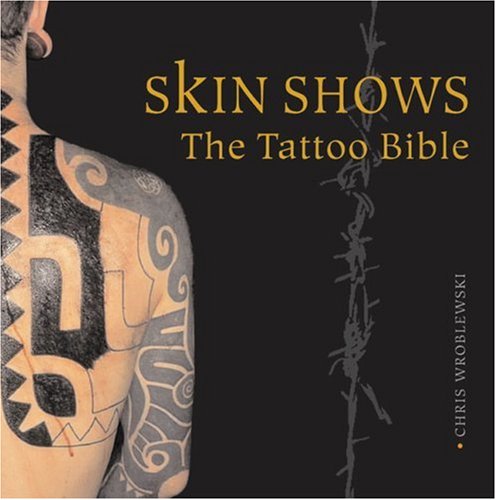
Skin Shows: The Tattoo Bible

Buy Cheap Skin Shows: The Tattoo Bible


Buy Low Price From Here Now

Skin Shows: The Tattoo Bible is a rich and provocative pictorial survey of an ancient art form that, until recently, remained hidden in our society’s cultural underground. Tracing a global journey through the history and culture of tattoo art, Chris Wroblewski’s new book is a stunning visual document. Above all, it is a book about people and personalities—here skinheads, circus freaks, Buddhist monks, tattoo fetishists, and slightly more ordinary individuals all reveal their obsessions with and dedication to the ritual of ink and pain. Chris Wroblewski is considered to be the foremost photographer of tattoo art. He is the author of more than 15 books on the subject, including Pigments of Imagination.

Readmore

Technical Details

See more technical details
Customer Buzz
 "very disappointing" 2009-04-13
By M. Jones (arleta, ca United States)
this book is for the beginner without any experience, but save your money and buy huck spaulding's how to tattoo book for 1\3 the price. i have been a professional tattoo artist for 15 years, this book cut and pastes tattoo techniques from 10 years before i started,it is a very good attempt at collecting information from preprinted articles and internet postings compiling into a booklet that is being marketed as original instructional techniques. but for anyone with skills at tattooing this book is not for you.

Customer Buzz
 "Fell apart the first time we read it" 2007-04-01
By Ms. Megan A. Bob (Wannanup, Western Australia)
The photos are brilliant but the book is so poorly bound that it fell apart the moment we opened it. The book should have been a hard cover. It was cheaply produced. A real let down.

Customer Buzz
 "If you are considering for public library purchase" 2006-08-16
By Catherine E. Ingram (Lisle, IL)
This book has full frontal nudity. The binding is terrible. The whole book fell apart after a dozen circs. It does have lots of color photos in it.

cei

Customer Buzz
 "* For the illiterate enthusiast *" 2006-01-04
By Megan (Chicago, IL United States)
This book is good for the tattoo enthusiast that knows NOTHING about tattoos.It shows you a glimpse into tattoo art around the world,and also gives you a bit about the history and reasoning behind them. Bottom line,if you want a great tattoo picture boo,this is NOT the book. If you know hardly anything about tattoos and want to learn more,this book is NOT for you. If you want to learn a bit more about the culture behind the art,and know little to nothing about it at this point,this book will as they say be your "bible".


Images Product
Buy Skin Shows: The Tattoo Bible Now

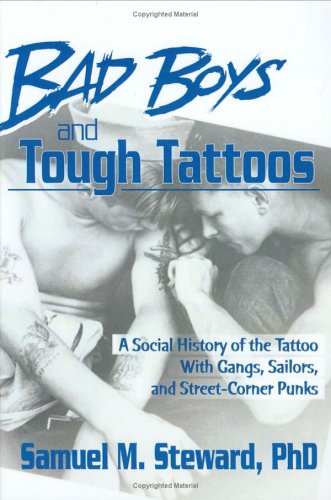
Bad Boys and Tough Tattoos: A Social History of the Tattoo With Gangs, Sailors and Street-Corner Punks, 1950-1965 (Haworth Series in Gay & Lesbian Studies)

Buy Cheap Bad Boys and Tough Tattoos: A Social History of the Tattoo With Gangs, Sailors and Street-Corner Punks, 1950-1965 (Haworth Series in Gay & Lesbian Studies)


Buy Low Price From Here Now

Explore the dark subculture of 1950s tattoos!

In the early 1950s, when tattoos were the indelible mark of a lowlife, an erudite professor of English--a friend of Gertrude Stein, Thomas Mann, Andre Gide, and Thornton Wilder--abandoned his job to become a tattoo artist (and incidentally a researcher for Alfred Kinsey). Bad Boys and Tough Tattoos tells the story of his years working in a squalid arcade on Chicago’s tough State Street. During that time he left his mark on a hundred thousand people, from youthful sailors who flaunted their tattoos as a rite of manhood to executives who had to hide their passion for well-ornamented flesh.

Bad Boys and Tough Tattoos is anything but politically correct. The gritty, film-noir details of Skid Row life are rendered with unflinching honesty and furtive tenderness. His lascivious relish for the young sailors swaggering or staggering in for a new tattoo does not blind him to the sordidness of the world they inhabited. From studly nineteen-year-olds who traded blow jobs for tattoos to hard-bitten dykes who scared the sailors out of the shop, the clientele was seedy at best: sailors, con men, drunks, hustlers, and Hells Angels.

These days, when tattoo art is sported by millionaires and the middle class as well as by gang members and punk rockers, the sheer squalor of Bad Boys and Tough Tattoos is a revelation. However much tattoo culture has changed, the advice and information is still sound:

  • how to select a good tattoo artist
  • what to expect during a tattooing session
  • how to ensure the artist uses sterile needles and other safety precautions
  • how to care for a new tattoo
  • why people get tattoos--25 sexual motivations for body art

    More than a history of the art or a roster of famous--and infamous--tattoo customers and artists, Bad Boys and Tough Tattoos is a raunchy, provocative look at a forgotten subculture.


Readmore

Technical Details

See more technical details
Customer Buzz
 "Sam Steward - the man." 2007-02-09
By M. Foster (Southern California)
I met Sam Steward around 1983 when he was quite elderly and I wonder what his friends would have to say about these reviews. I think most of the reviews are kind to him and the only real negativity I see are those in which the authors came to the book expecting a strictly scholarly work. Sam Steward wasn't a researcher in the classic social science sense. He was an energetic scholar, but his greatest interest was in the creation of literature, not in sifting through haystacks of facts to find new scientific insights.


I read this book shortly after I met Sam. I was actually more familiar with him as a writer of gay erotica, but this book tells you more about the kind of man Sam was. He had deep curiosities about the underlying psychological motivations of people and that's really the area in which he spent most of his time. That curiosity it typical of people who enjoy writing and his look into this subculture, one could speculate, is like one the instances any writer takes in which they journey into an objective investigation, knowing they are mining information and insights that will later inform their true love, writing fiction.


There's no doubt Sam took this investigation seriously, but it was never his intention to apply the level or scientific rigor one would expect of someone of the status of Alfred Kinsey. What he did at Kinsey's request was to describe a world, a microcosm, that would give Kinsey enough information to determine if a larger and more serious study was warranted. There weren't focus groups walking into Sam's tattoo parlor responding to a call for papers. They were rough and alienated men, drunks with their defenses down, kids in rebellions, frustrated people acting out. It takes an entertaining personality to get these people to say what they say and Sam Steward, if anything, was a decidely entertaining man; a storyteller who could keep a roomful of people enthralled with his vivid, if not naughty, descriptions of the extremes in society that are right under our very noses; extremes most people cannot see.


I've thought about this book a many, many times; practically every time I see a tattoo. Getting inked has never appealed to me but Sam's understanding of it most certainly does appeal to me. Even two decades after reading it, some things I remember from it make me smile and laugh out loud. There's a kind of deep-seated validation of humanness here that I think will serve many who read this. This isn't a book for everyone, but one thing that can be said is that there's more to it than the average person knows. It's art that goes deeper than the skin.

Customer Buzz
 "Curiosity Piece" 2006-11-01
By Lew Troop (Kansas)
This interesting book comes from an era that is now far gone. As a child, just after WWII, I saw men with, primarily, service tattoos and wanted one. It was carefully explained to me that "nice men" did not get tattooed and that the service tattoos weren't truly tattoos but the equivalent of service stripes. As a six year old child I found this confusing.


What Dr. Steward has done is gathered impressions of what it was like to be a tattooist circa 1950 on to about 1970. His portraits of sleazy interior malls and the persons who frequented them are chillingly real as are the sad impressions of his clientele.


For me, still un-inked, the larger story here is the conversion from the groves of Academe to the existence of a journeyman tattoo artist. We have his intellectual observations, as well his intimate relationship with the Kinsey Institute,to provide not only a look at the deductive logic behind getting a tattoo, at least at a certain socio-economic level then, are revelatory but perhaps only to then.


The wide spread acceptance of tattooing today (the last statistic I read said over 35% of men today have one)make this interesting reading if not germane to lifestyles today. Yet it has substance and to those with a taste for not only tattooing but the sexual implications, this will confirm much of what may have been thought. Dr. Steward's open acknowledgment of his sexual preferences de-fuses any leering speculation as to what might really have been his motives.


Still, for those who want an atmospheric, well constructed picture of an era, this book will fill in your urge to return to the "greaser" age. And for those of us who wanted one, but were denied, perhaps liberate our minds to, now, go get what we wanted then. If I had the hair, give me a flat top with a D.A. And that knife piercing the bicep just below the pack of Camels rolled in the sleeve of my black T-shirt.

Customer Buzz
 "first serious attempt to document tattoo culture 1950-1965" 2004-09-10
By TammyJo Eckhart (Bloomington, Indiana United States)
Academics get tired too but most don't do a 180 turn and join subcultures that seem completely opposed to their previous community. Samuel Steward became a tattoo artist but kept his scholarly mind working as he did so upon the urging of Kinsey, yes, that Alfred Kinsey. The result many years later is this book. Part history, part personal recollection, and part social sciences, this is an interesting and easy to read book. If you don't except detailed interviews with people or rigorous research protocols you won't be disappointed. I think the first half of the book which focuses on what he observed is much better than the second more "historical" half. It could use photos and a better spine to hold the book together.

Customer Buzz
 "Steer clear: an amateur work" 2002-08-22
By Quickhappy (Big city, big country)
As a scholar of what might be called outsiders, I was eager to read this work on tatooing. But the scholarship here is hackneyed and unprofessional. His sources are scattered and incomplete and his discussion is of similar quality. Given the excellent quality of research being done on this topic, this book falls into a dont-bother-with category.

Customer Buzz
 "What a Read" 2002-06-21
By steve blair (santa ana, ca USA)
Having 4 tattoo's applied last year at the ripe young age of 50, I was fascinated by this book. Tattoo's in the 50's & 60's apparently were taboo except for the underbelly of life. Looking at how they are accepted today as opposed to then is astounding. The syndicate was even involved in the 50's. The book actually had me laughing out loud at some of the situations this highly educated man faced when he gave up teaching English at a major university and took up tattooing. If you have any interest in tattoo's be sure to purchas this one.


Images Product

Buy Bad Boys and Tough Tattoos: A Social History of the Tattoo With Gangs, Sailors and Street-Corner Punks, 1950-1965 (Haworth Series in Gay & Lesbian Studies) Now

Bad Boys and Tough Tattoos: A Social History of the Tattoo With Gangs, Sailors, and Street-Corner Punks, 1950-1965 (Haworth Gay & Lesbian Studies)

Buy Cheap Bad Boys and Tough Tattoos: A Social History of the Tattoo With Gangs, Sailors, and Street-Corner Punks, 1950-1965 (Haworth Gay & Lesbian Studies)


Buy Low Price From Here Now

Explore the dark subculture of 1950s tattoos!

In the early 1950s, when tattoos were the indelible mark of a lowlife, an erudite professor of English--a friend of Gertrude Stein, Thomas Mann, Andre Gide, and Thornton Wilder--abandoned his job to become a tattoo artist (and incidentally a researcher for Alfred Kinsey). Bad Boys and Tough Tattoos tells the story of his years working in a squalid arcade on Chicago’s tough State Street. During that time he left his mark on a hundred thousand people, from youthful sailors who flaunted their tattoos as a rite of manhood to executives who had to hide their passion for well-ornamented flesh.

Bad Boys and Tough Tattoos is anything but politically correct. The gritty, film-noir details of Skid Row life are rendered with unflinching honesty and furtive tenderness. His lascivious relish for the young sailors swaggering or staggering in for a new tattoo does not blind him to the sordidness of the world they inhabited. From studly nineteen-year-olds who traded blow jobs for tattoos to hard-bitten dykes who scared the sailors out of the shop, the clientele was seedy at best: sailors, con men, drunks, hustlers, and Hells Angels.

These days, when tattoo art is sported by millionaires and the middle class as well as by gang members and punk rockers, the sheer squalor of Bad Boys and Tough Tattoos is a revelation. However much tattoo culture has changed, the advice and information is still sound:

  • how to select a good tattoo artist
  • what to expect during a tattooing session
  • how to ensure the artist uses sterile needles and other safety precautions
  • how to care for a new tattoo
  • why people get tattoos--25 sexual motivations for body art

    More than a history of the art or a roster of famous--and infamous--tattoo customers and artists, Bad Boys and Tough Tattoos is a raunchy, provocative look at a forgotten subculture.


Readmore

Technical Details

See more technical details
Customer Buzz
 "Sam Steward - the man." 2007-02-09
By M. Foster (Southern California)
I met Sam Steward around 1983 when he was quite elderly and I wonder what his friends would have to say about these reviews. I think most of the reviews are kind to him and the only real negativity I see are those in which the authors came to the book expecting a strictly scholarly work. Sam Steward wasn't a researcher in the classic social science sense. He was an energetic scholar, but his greatest interest was in the creation of literature, not in sifting through haystacks of facts to find new scientific insights.


I read this book shortly after I met Sam. I was actually more familiar with him as a writer of gay erotica, but this book tells you more about the kind of man Sam was. He had deep curiosities about the underlying psychological motivations of people and that's really the area in which he spent most of his time. That curiosity it typical of people who enjoy writing and his look into this subculture, one could speculate, is like one the instances any writer takes in which they journey into an objective investigation, knowing they are mining information and insights that will later inform their true love, writing fiction.


There's no doubt Sam took this investigation seriously, but it was never his intention to apply the level or scientific rigor one would expect of someone of the status of Alfred Kinsey. What he did at Kinsey's request was to describe a world, a microcosm, that would give Kinsey enough information to determine if a larger and more serious study was warranted. There weren't focus groups walking into Sam's tattoo parlor responding to a call for papers. They were rough and alienated men, drunks with their defenses down, kids in rebellions, frustrated people acting out. It takes an entertaining personality to get these people to say what they say and Sam Steward, if anything, was a decidely entertaining man; a storyteller who could keep a roomful of people enthralled with his vivid, if not naughty, descriptions of the extremes in society that are right under our very noses; extremes most people cannot see.


I've thought about this book a many, many times; practically every time I see a tattoo. Getting inked has never appealed to me but Sam's understanding of it most certainly does appeal to me. Even two decades after reading it, some things I remember from it make me smile and laugh out loud. There's a kind of deep-seated validation of humanness here that I think will serve many who read this. This isn't a book for everyone, but one thing that can be said is that there's more to it than the average person knows. It's art that goes deeper than the skin.

Customer Buzz
 "Curiosity Piece" 2006-11-01
By Lew Troop (Kansas)
This interesting book comes from an era that is now far gone. As a child, just after WWII, I saw men with, primarily, service tattoos and wanted one. It was carefully explained to me that "nice men" did not get tattooed and that the service tattoos weren't truly tattoos but the equivalent of service stripes. As a six year old child I found this confusing.


What Dr. Steward has done is gathered impressions of what it was like to be a tattooist circa 1950 on to about 1970. His portraits of sleazy interior malls and the persons who frequented them are chillingly real as are the sad impressions of his clientele.


For me, still un-inked, the larger story here is the conversion from the groves of Academe to the existence of a journeyman tattoo artist. We have his intellectual observations, as well his intimate relationship with the Kinsey Institute,to provide not only a look at the deductive logic behind getting a tattoo, at least at a certain socio-economic level then, are revelatory but perhaps only to then.


The wide spread acceptance of tattooing today (the last statistic I read said over 35% of men today have one)make this interesting reading if not germane to lifestyles today. Yet it has substance and to those with a taste for not only tattooing but the sexual implications, this will confirm much of what may have been thought. Dr. Steward's open acknowledgment of his sexual preferences de-fuses any leering speculation as to what might really have been his motives.


Still, for those who want an atmospheric, well constructed picture of an era, this book will fill in your urge to return to the "greaser" age. And for those of us who wanted one, but were denied, perhaps liberate our minds to, now, go get what we wanted then. If I had the hair, give me a flat top with a D.A. And that knife piercing the bicep just below the pack of Camels rolled in the sleeve of my black T-shirt.

Customer Buzz
 "first serious attempt to document tattoo culture 1950-1965" 2004-09-10
By TammyJo Eckhart (Bloomington, Indiana United States)
Academics get tired too but most don't do a 180 turn and join subcultures that seem completely opposed to their previous community. Samuel Steward became a tattoo artist but kept his scholarly mind working as he did so upon the urging of Kinsey, yes, that Alfred Kinsey. The result many years later is this book. Part history, part personal recollection, and part social sciences, this is an interesting and easy to read book. If you don't except detailed interviews with people or rigorous research protocols you won't be disappointed. I think the first half of the book which focuses on what he observed is much better than the second more "historical" half. It could use photos and a better spine to hold the book together.

Customer Buzz
 "Steer clear: an amateur work" 2002-08-22
By Quickhappy (Big city, big country)
As a scholar of what might be called outsiders, I was eager to read this work on tatooing. But the scholarship here is hackneyed and unprofessional. His sources are scattered and incomplete and his discussion is of similar quality. Given the excellent quality of research being done on this topic, this book falls into a dont-bother-with category.

Customer Buzz
 "What a Read" 2002-06-21
By steve blair (santa ana, ca USA)
Having 4 tattoo's applied last year at the ripe young age of 50, I was fascinated by this book. Tattoo's in the 50's & 60's apparently were taboo except for the underbelly of life. Looking at how they are accepted today as opposed to then is astounding. The syndicate was even involved in the 50's. The book actually had me laughing out loud at some of the situations this highly educated man faced when he gave up teaching English at a major university and took up tattooing. If you have any interest in tattoo's be sure to purchas this one.


Images Product

Buy Bad Boys and Tough Tattoos: A Social History of the Tattoo With Gangs, Sailors, and Street-Corner Punks, 1950-1965 (Haworth Gay & Lesbian Studies) Now

Graphic Design: The New Basics

Buy Cheap Graphic Design: The New Basics


Buy Low Price From Here Now

How do designers get ideas? Many spend their time searching for clever combinations of forms, fonts, and colors inside the design annuals and monographs of other designers' work. For those looking to challenge the cut-and-paste mentality there are few resources that are both informative and inspirational. In Graphic Design: The New Basics, Ellen Lupton, best-selling author of such books as Thinking with Type and Design It Yourself, and design educator Jennifer Cole Phillips refocus design instruction on the study of the fundamentals of form in a critical, rigorous way informed by contemporary media, theory, and software systems.

Through visual demonstrations and concise commentary, The New Basics shows students and professionals how to build interest and complexity around simple relationships between formal elements of two-dimensional design such as point, line, plane, scale, hierarchy, layers, and transparency. The New Basics explains the key concepts of visual language that inform any work of design from a logo or letterhead to a complex web site. It takes a fresh approach to design instruction by emphasizing visually intensive, form-based thinking in a manner that is in tune with the latest developments in contemporary media, theory, art, and technology. Colorful, compact, and clearly written, The New Basics is the new indispensable resource for anyone seeking a smart, inspiring introduction to graphic design and destined to become the standard reference work in design education.
Readmore

Technical Details

- ISBN13: 9781568987026
- Condition: NEW
- Notes: Brand New from Publisher. No Remainder Mark.
See more technical details
Customer Buzz
 "Disappointing" 2010-02-19
By Louis B. Dina (Birmingham, AL)
I was very disappointed in this book. Given the title, I expected more cohesive guidelines and analysis on assembling the "New Basics" into my designs. To me, it was primarily a showcase of work done by the authors' students, some of which I enjoyed, but I didn't find it very helpful or insightful. In fact, I returned it for a refund.


Also, I found some of the type so small as to be unreadable, which for experienced designers, I found surprising. Not high on my list, obviously. I expect a title and/or subtitle to deliver on its implied promise. Perhaps I totally misunderstood the intent of the book, but I expected something that would weave these so-called new basics into a whole, provide direction, and help me produce better designs. Maybe that happens over the course of time in class, but I didn't see that happening in the book.


If you're looking for guidance and direction, I don't think this is the book for you. It wasn't for me.

Customer Buzz
 "Graphic Design The new Basics" 2009-09-05
By E. Schneider (Tampa FL)
This is an excellent text book for beginning design and art students. Easy to read with strong examples this book fills a need in the arts community.

Customer Buzz
 "Amazing!" 2009-02-17
By Rhea Mertha
It came fast and on time through standard shipping. It was exactly in the condition I ordered it in and was carefully packaged so that no damage occurred during shipping. Thank you so much!! I really prefer buying from Amazon than private sellers.

Customer Buzz
 "Top of the line graphic design book. Great for referencin." 2008-09-28
By Tyler Hargrove (Mo. USA)
This book is very helpful. It has a lot to offer to beginning students or just someone trying on their own. Its not so organized as a text book would be which keeps it fresh and fun to still look at. But it definitely has a lot to offer.

Customer Buzz
 "excellent overview" 2008-08-28
By Gary R. Harding (San Diego, CA USA)
this is an excellent overview: while I appreciated the new media content, that felt far more like info for those considering an MFA in graphic design and are not what I feel are basic in any way. I am a working graphic artist and using programming languages easy or not to develop visual media is not part of my work or a requirement. Flash animations, web design are, though. I feel other areas could have been better flushed out.


Images Product

Buy Graphic Design: The New Basics Now

Graphic Design: The New Basics

Buy Cheap Graphic Design: The New Basics


Buy Low Price From Here Now

How do designers get ideas? Many spend their time searching for clever combinations of forms, fonts, and colors inside the design annuals and monographs of other designers' work. For those looking to challenge the cut-and-paste mentality there are few resources that are both informative and inspirational. In Graphic Design: The New Basics, Ellen Lupton, best-selling author of such books as Thinking with Type and Design It Yourself, and design educator Jennifer Cole Phillips refocus design instruction on the study of the fundamentals of form in a critical, rigorous way informed by contemporary media, theory, and software systems.

Through visual demonstrations and concise commentary, The New Basics shows students and professionals how to build interest and complexity around simple relationships between formal elements of two-dimensional design such as point, line, plane, scale, hierarchy, layers, and transparency. The New Basics explains the key concepts of visual language that inform any work of design from a logo or letterhead to a complex web site. It takes a fresh approach to design instruction by emphasizing visually intensive, form-based thinking in a manner that is in tune with the latest developments in contemporary media, theory, art, and technology. Colorful, compact, and clearly written, The New Basics is the new indispensable resource for anyone seeking a smart, inspiring introduction to graphic design and destined to become the standard reference work in design education.
Readmore

Technical Details

See more technical details
Customer Buzz
 "Disappointing" 2010-02-19
By Louis B. Dina (Birmingham, AL)
I was very disappointed in this book. Given the title, I expected more cohesive guidelines and analysis on assembling the "New Basics" into my designs. To me, it was primarily a showcase of work done by the authors' students, some of which I enjoyed, but I didn't find it very helpful or insightful. In fact, I returned it for a refund.


Also, I found some of the type so small as to be unreadable, which for experienced designers, I found surprising. Not high on my list, obviously. I expect a title and/or subtitle to deliver on its implied promise. Perhaps I totally misunderstood the intent of the book, but I expected something that would weave these so-called new basics into a whole, provide direction, and help me produce better designs. Maybe that happens over the course of time in class, but I didn't see that happening in the book.


If you're looking for guidance and direction, I don't think this is the book for you. It wasn't for me.

Customer Buzz
 "Graphic Design The new Basics" 2009-09-05
By E. Schneider (Tampa FL)
This is an excellent text book for beginning design and art students. Easy to read with strong examples this book fills a need in the arts community.

Customer Buzz
 "Amazing!" 2009-02-17
By Rhea Mertha
It came fast and on time through standard shipping. It was exactly in the condition I ordered it in and was carefully packaged so that no damage occurred during shipping. Thank you so much!! I really prefer buying from Amazon than private sellers.

Customer Buzz
 "Top of the line graphic design book. Great for referencin." 2008-09-28
By Tyler Hargrove (Mo. USA)
This book is very helpful. It has a lot to offer to beginning students or just someone trying on their own. Its not so organized as a text book would be which keeps it fresh and fun to still look at. But it definitely has a lot to offer.

Customer Buzz
 "excellent overview" 2008-08-28
By Gary R. Harding (San Diego, CA USA)
this is an excellent overview: while I appreciated the new media content, that felt far more like info for those considering an MFA in graphic design and are not what I feel are basic in any way. I am a working graphic artist and using programming languages easy or not to develop visual media is not part of my work or a requirement. Flash animations, web design are, though. I feel other areas could have been better flushed out.


Images Product

Buy Graphic Design: The New Basics Now

Graphic Design: The New Basics

Buy Cheap Graphic Design: The New Basics


Buy Low Price From Here Now

How do designers get ideas? Many spend their time searching for clever combinations of forms, fonts, and colors inside the design annuals and monographs of other designers' work. For those looking to challenge the cut-and-paste mentality there are few resources that are both informative and inspirational. In Graphic Design: The New Basics, Ellen Lupton, best-selling author of such books as Thinking with Type and Design It Yourself, and design educator Jennifer Cole Phillips refocus design instruction on the study of the fundamentals of form in a critical, rigorous way informed by contemporary media, theory, and software systems.

Through visual demonstrations and concise commentary, The New Basics shows students and professionals how to build interest and complexity around simple relationships between formal elements of two-dimensional design such as point, line, plane, scale, hierarchy, layers, and transparency. The New Basics explains the key concepts of visual language that inform any work of design from a logo or letterhead to a complex web site. It takes a fresh approach to design instruction by emphasizing visually intensive, form-based thinking in a manner that is in tune with the latest developments in contemporary media, theory, art, and technology. Colorful, compact, and clearly written, The New Basics is the new indispensable resource for anyone seeking a smart, inspiring introduction to graphic design and destined to become the standard reference work in design education.
Readmore

Technical Details

See more technical details
Customer Buzz
 "Disappointing" 2010-02-19
By Louis B. Dina (Birmingham, AL)
I was very disappointed in this book. Given the title, I expected more cohesive guidelines and analysis on assembling the "New Basics" into my designs. To me, it was primarily a showcase of work done by the authors' students, some of which I enjoyed, but I didn't find it very helpful or insightful. In fact, I returned it for a refund.


Also, I found some of the type so small as to be unreadable, which for experienced designers, I found surprising. Not high on my list, obviously. I expect a title and/or subtitle to deliver on its implied promise. Perhaps I totally misunderstood the intent of the book, but I expected something that would weave these so-called new basics into a whole, provide direction, and help me produce better designs. Maybe that happens over the course of time in class, but I didn't see that happening in the book.


If you're looking for guidance and direction, I don't think this is the book for you. It wasn't for me.

Customer Buzz
 "Graphic Design The new Basics" 2009-09-05
By E. Schneider (Tampa FL)
This is an excellent text book for beginning design and art students. Easy to read with strong examples this book fills a need in the arts community.

Customer Buzz
 "Amazing!" 2009-02-17
By Rhea Mertha
It came fast and on time through standard shipping. It was exactly in the condition I ordered it in and was carefully packaged so that no damage occurred during shipping. Thank you so much!! I really prefer buying from Amazon than private sellers.

Customer Buzz
 "Top of the line graphic design book. Great for referencin." 2008-09-28
By Tyler Hargrove (Mo. USA)
This book is very helpful. It has a lot to offer to beginning students or just someone trying on their own. Its not so organized as a text book would be which keeps it fresh and fun to still look at. But it definitely has a lot to offer.

Customer Buzz
 "excellent overview" 2008-08-28
By Gary R. Harding (San Diego, CA USA)
this is an excellent overview: while I appreciated the new media content, that felt far more like info for those considering an MFA in graphic design and are not what I feel are basic in any way. I am a working graphic artist and using programming languages easy or not to develop visual media is not part of my work or a requirement. Flash animations, web design are, though. I feel other areas could have been better flushed out.


Images Product

Buy Graphic Design: The New Basics Now

Tattooing the World: Pacific Designs in Print and Skin

Buy Cheap Tattooing the World: Pacific Designs in Print and Skin


Buy Low Price From Here Now

In the 1830s an Irishman named James F. O'Connell acquired a full-body tattoo while living as a castaway in the Pacific. The tattoo featured traditional patterns that, to native Pohnpeians, defined O'Connell's life; they made him wholly human. Yet upon traveling to New York, these markings singled him out as a freak. His tattoos frightened women and children, and ministers warned their congregations that viewing O'Connell's markings would cause the ink to transfer to the skin of their unborn children. In many ways, O'Connell's story exemplifies the unique history of the modern tattoo, which began in the Pacific and then spread throughout the world. No matter what form it has taken, the tattoo has always embodied social standing, aesthetics, ethics, culture, gender, and sexuality. Tattoos are personal and corporate, private and public. They mark the profane and the sacred, the extravagant and the essential, the playful and the political. From the Pacific islands to the world at large, tattoos are a symbolic and often provocative form of expression and communication.

Tattooing the World is the first book on tattoo literature and culture. Juniper Ellis traces the origins and significance of modern tattoo in the works of nineteenth- and twentieth-century artists, travelers, missionaries, scientists, and such writers as Herman Melville, Margaret Mead, Albert Wendt, and Sia Figiel. Traditional Pacific tattoo patterns are formed using an array of well-defined motifs. They place the individual in a particular community and often convey genealogy and ideas of the sacred. However, outside of the Pacific, those who wear and view tattoos determine their meaning and interpret their design differently. Reading indigenous historiography alongside Western travelogue and other writings, Ellis paints a surprising portrait of how culture has been etched both on the human form and on a body of literature.


Readmore

Technical Details

See more technical details
Customer Buzz
 "Best of Baltimore!" 2008-09-19
By Baltimoretim (Baltimore, MD, USA)
An intriguing and in-depth look at the history of the globe-crossing tattoo, this book won the Baltimore City Paper's 2008 "Best of Baltimore" award for "Best New Book by a Baltimore Author."

Customer Buzz
 "Review-Tattooing the World" 2008-08-14
By Barbara Wavell (Orlando Florida)
This book addresses the topic in a comprehensive and academic manner, but frankly I was disappointed because it didn't have more illustrations.


Images Product

Buy Tattooing the World: Pacific Designs in Print and Skin Now

Tattooing the World: Pacific Designs in Print and Skin

Buy Cheap Tattooing the World: Pacific Designs in Print and Skin


Buy Low Price From Here Now

In the 1830s an Irishman named James F. O'Connell acquired a full-body tattoo while living as a castaway in the Pacific. The tattoo featured traditional patterns that, to native Pohnpeians, defined O'Connell's life; they made him wholly human. Yet upon traveling to New York, these markings singled him out as a freak. His tattoos frightened women and children, and ministers warned their congregations that viewing O'Connell's markings would cause the ink to transfer to the skin of their unborn children. In many ways, O'Connell's story exemplifies the unique history of the modern tattoo, which began in the Pacific and then spread throughout the world. No matter what form it has taken, the tattoo has always embodied social standing, aesthetics, ethics, culture, gender, and sexuality. Tattoos are personal and corporate, private and public. They mark the profane and the sacred, the extravagant and the essential, the playful and the political. From the Pacific islands to the world at large, tattoos are a symbolic and often provocative form of expression and communication.

Tattooing the World is the first book on tattoo literature and culture. Juniper Ellis traces the origins and significance of modern tattoo in the works of nineteenth- and twentieth-century artists, travelers, missionaries, scientists, and such writers as Herman Melville, Margaret Mead, Albert Wendt, and Sia Figiel. Traditional Pacific tattoo patterns are formed using an array of well-defined motifs. They place the individual in a particular community and often convey genealogy and ideas of the sacred. However, outside of the Pacific, those who wear and view tattoos determine their meaning and interpret their design differently. Reading indigenous historiography alongside Western travelogue and other writings, Ellis paints a surprising portrait of how culture has been etched both on the human form and on a body of literature.


Readmore

Technical Details

See more technical details
Customer Buzz
 "Best of Baltimore!" 2008-09-19
By Baltimoretim (Baltimore, MD, USA)
An intriguing and in-depth look at the history of the globe-crossing tattoo, this book won the Baltimore City Paper's 2008 "Best of Baltimore" award for "Best New Book by a Baltimore Author."

Customer Buzz
 "Review-Tattooing the World" 2008-08-14
By Barbara Wavell (Orlando Florida)
This book addresses the topic in a comprehensive and academic manner, but frankly I was disappointed because it didn't have more illustrations.


Images Product

Buy Tattooing the World: Pacific Designs in Print and Skin Now